Emergency Medical Coverage: How Health Insurance Protects You
Introduction
Medical emergencies can happen at any time. A sudden accident, severe illness, unexpected injury, or serious allergic reaction may require immediate medical attention. In these situations, getting treatment quickly is more important than worrying about the cost. However, emergency medical services can be expensive, especially when hospital visits, diagnostic tests, medicines, and specialist care are required.
Emergency Medical Coverage helps people manage eligible expenses related to unexpected medical emergencies. Depending on the health insurance plan, it may cover emergency room visits, ambulance services, urgent diagnostic tests, hospital treatment, and other medically necessary services. The exact benefits depend on the policy, provider network, location, and terms of coverage.
Understanding Emergency Medical Coverage before an emergency occurs can help individuals and families make better insurance decisions. It also helps policyholders understand deductibles, copayments, coinsurance, coverage limits, and exclusions.
This guide explains how emergency health insurance works, what it may cover, how to choose a suitable plan, and what steps to take when an emergency occurs.
What Is Emergency Medical Coverage?
Emergency Medical Coverage is a type of health insurance benefit designed to help pay for eligible treatment when a person experiences a sudden medical condition that requires immediate attention.
A medical emergency may involve a serious injury, severe pain, breathing difficulties, heavy bleeding, or symptoms that could indicate a life-threatening condition. Emergency departments evaluate patients and provide treatment according to their medical needs.
The insurance benefit available to you depends on your policy. Some health insurance plans include emergency services as part of their standard benefits, while travel medical insurance and certain temporary policies have separate conditions and limits.
For example, a person who suffers a serious injury in a car accident may need ambulance transportation, emergency imaging, surgery, and hospital care. Emergency Medical Coverage may help pay for eligible services, subject to the policy’s financial requirements and exclusions.
It is important to remember that insurance does not necessarily pay every bill in full. Deductibles, copayments, coinsurance, out-of-network charges, and coverage limits may affect your final costs.
Why Emergency Medical Coverage Is Important
Medical emergencies can create both physical and financial stress. Having appropriate insurance may reduce some of the financial pressure and help people access necessary medical services.
1. Protection Against Unexpected Medical Bills
Emergency treatment can involve several separate charges. Patients may receive bills for emergency physicians, hospital facilities, laboratory testing, imaging, medications, and ambulance transportation.
Without adequate insurance, these costs can become difficult to manage. Emergency Medical Coverage may reduce eligible out-of-pocket expenses according to the policy.
2. Access to Timely Medical Care
Knowing how your insurance works can help you understand where to seek treatment and which facilities participate in your plan.
However, do not delay emergency care because you are uncertain about insurance coverage. If you believe a condition is life-threatening, contact local emergency services or go to the nearest appropriate emergency department.
Greater Financial Confidence
Unexpected healthcare expenses can affect savings, monthly bills, and household budgets. Suitable insurance can make some emergency costs more predictable.
The amount of protection depends on the plan’s deductible, out-of-pocket maximum, exclusions, and benefit limits.
Support for Families
Families may face additional challenges when a child, parent, or other family member requires urgent treatment. A family health insurance plan may provide emergency benefits for covered dependents.
Parents should review age requirements, dependent eligibility, network rules, and any special conditions that apply to children.
What Does Emergency Medical Coverage Usually Include?
The benefits included in Emergency Medical Coverage vary by insurer and policy. The following services may be covered when they are medically necessary and meet the plan’s requirements.
Emergency Room Visits
Emergency room benefits may help pay for evaluation and treatment following a sudden illness or injury.
The final cost may depend on whether the service qualifies as an emergency, the facility’s billing arrangements, and the policy’s cost-sharing rules.
Ambulance Services
Some plans cover eligible emergency ambulance transportation by ground ambulance or, in certain circumstances, air ambulance.
Coverage may depend on medical necessity, transportation arrangements, local regulations, and the policy’s specific exclusions.
Diagnostic Tests
Doctors may order blood tests, X-rays, CT scans, or other diagnostic procedures to identify the cause of an emergency.
Emergency Medical Coverage may pay a portion of eligible tests, subject to deductibles, coinsurance, and applicable benefit rules.
Emergency Surgery
Some medical emergencies require immediate surgery. Depending on the policy, covered procedures may include surgery needed to treat serious injuries or urgent medical conditions.
Hospital charges, surgeon fees, anesthesia, and related services may be billed separately, so reviewing the explanation of benefits is important.
Hospital Admission
A patient may need to remain in hospital after emergency evaluation. Eligible inpatient services may be covered under the plan’s hospitalization benefits.
The insurer may apply separate rules for inpatient treatment, intensive care, specialist services, or post-emergency rehabilitation.
Emergency Prescription Medicines
Some plans cover medicines administered during emergency treatment or prescriptions issued when a patient is discharged.
Coverage for pharmacy medicines may follow different rules from medicines supplied directly by a hospital.
What Emergency Medical Coverage May Not Include
Understanding exclusions is just as important as understanding benefits. Emergency Medical Coverage does not automatically cover every medical expense.
Depending on the policy, exclusions or limitations may apply to:
- Treatment for conditions that do not meet the policy’s emergency criteria.
- Non-emergency visits to emergency departments.
- Services that are not medically necessary.
- Certain experimental or investigational treatments.
- Injuries or activities specifically excluded by the policy.
- Treatment outside the permitted geographic coverage area.
- Costs above stated benefit limits.
- Services excluded under specific travel or temporary insurance policies.
Pre-existing conditions may be treated differently depending on the type of insurance and the applicable rules. Some policies offer coverage for certain pre-existing conditions, while others restrict it.
Always read the policy wording before purchasing coverage. If a benefit is unclear, ask the insurer for a written explanation.
Understanding Emergency Medical Insurance Costs
The price of emergency treatment depends on several factors. Even when you have insurance, you may need to pay part of the bill yourself.
Deductible
A deductible is the amount you must pay for certain covered healthcare services before the insurer begins paying according to the plan’s terms.
Some services may have different deductible rules, so check the policy summary.
Copayment
A copayment, often called a copay, is a fixed amount you pay for a covered service.
For example, a policy might require a specified copayment for an emergency room visit. The actual amount depends on your plan.
Coinsurance
Coinsurance is the percentage of eligible costs you pay after any applicable deductible.
If your policy requires you to pay 20% of an eligible expense, you would generally pay that percentage of the amount to which the coinsurance provision applies. The insurer pays the remaining covered portion, subject to the policy.
Out-of-Pocket Maximum
Some health insurance plans set an annual maximum on qualifying out-of-pocket expenses for covered, in-network essential services.
Once the limit is reached, the plan may pay 100% of additional covered services for the remainder of the plan year. Premiums, non-covered services, and some out-of-network expenses may not count toward the limit.
Check the rules that apply in your country and to your specific policy.
How to Choose the Right Emergency Medical Coverage
Choosing suitable Emergency Medical Coverage requires more than comparing monthly premiums. Consider the following factors before making a decision.
1. Review the Coverage Benefits
Check which emergency services are included. Look for information about emergency room treatment, ambulance transportation, hospital admission, diagnostic tests, surgery, and follow-up care.
Do not assume that every plan covers these services in the same way.
2. Compare Deductibles and Other Costs
A plan with a low monthly premium may have a higher deductible or greater cost-sharing requirements.
Compare the premium, deductible, copayments, coinsurance, and applicable out-of-pocket maximum to estimate what you might pay during a medical emergency.
3. Check Hospital and Doctor Networks
Review the hospitals, emergency facilities, and healthcare providers associated with your insurance plan.
Network rules can affect the cost of care, although emergency services may be subject to special legal protections depending on your location.
4. Understand Geographic Coverage
If you travel frequently, check whether your plan covers emergencies outside your home region or country.
Standard domestic health insurance may provide limited protection during international travel. Travel medical insurance may offer additional benefits, but exclusions and limits still apply.
5. Check Coverage Limits
Some policies place limits on specific services, particularly temporary or travel medical insurance plans.
Review limits for emergency hospitalization, ambulance transportation, medical evacuation, and other relevant benefits.
6. Read the Exclusions
Read the exclusions carefully before buying a policy. Ask the insurer about pre-existing conditions, high-risk activities, waiting periods, and any restrictions that could affect your circumstances.
7. Consider Your Household Needs
Individuals, couples, families with children, and older adults may have different insurance needs.
Consider your budget, existing coverage, dependents, travel habits, and access to local healthcare facilities.
Emergency Medical Coverage for Individuals and Families
Individuals and families should choose coverage based on their circumstances rather than assuming that one plan suits everyone.
Coverage for Individuals
An individual policy may be suitable for someone who does not receive insurance through an employer or another program.
When comparing plans, examine emergency benefits alongside routine care, specialist visits, prescription medicines, and preventive services.
Coverage for Families
Family plans may cover eligible spouses and dependent children under one policy. However, deductibles and out-of-pocket limits can work differently for individual family members and the household as a whole.
Review the family deductible, dependent eligibility, and emergency benefits before enrolling.
Coverage for Older Adults
Older adults may want to pay particular attention to hospital benefits, prescription coverage, specialist access, and the rules governing pre-existing conditions.
Eligibility for public health programs and private insurance differs by country. Compare the available options before purchasing a separate policy.
Emergency Medical Coverage for Travelers
Travelers may face unexpected healthcare expenses when they become ill or injured away from home.
A domestic health insurance plan may not cover all international emergency expenses. Travel medical insurance can provide benefits for eligible emergency treatment abroad, depending on the contract.
Before traveling, check:
- The maximum amount payable for emergency medical treatment.
- Whether emergency hospitalization is included.
- Whether medically necessary evacuation is covered.
- How pre-existing medical conditions are handled.
- Whether the destination is included in the policy’s geographic coverage.
- Whether you must contact an assistance service before certain treatments.
- How to submit receipts and medical records for reimbursement.
Travel insurance and comprehensive health insurance are not identical. Travel medical policies may be designed for temporary trips and may not cover routine healthcare or long-term treatment.
For additional information, read the travel guidance published by your country’s official government travel authority and compare it with your insurer’s policy documents.
What to Do During a Medical Emergency
Knowing what to do during an emergency can help you respond quickly and communicate clearly with medical professionals.
Step 1: Get Immediate Help
If a condition appears life-threatening, contact local emergency services or go to the nearest appropriate emergency department. Do not delay necessary treatment while trying to obtain insurance approval.
Step 2: Share Important Medical Information
If possible, tell medical staff about allergies, current medicines, relevant medical history, and any other information that may help them provide safe treatment.
Step 3: Provide Insurance Details When Practical
Share your insurance card or policy information with the hospital when requested and when doing so does not delay emergency care.
If you cannot provide the details immediately, ask the hospital or insurer how they can be supplied later.
Step 4: Keep Relevant Documents
Keep copies of itemized bills, receipts, medical reports, prescriptions, discharge summaries, and claim forms.
These documents may be necessary if you need reimbursement or want the insurer to review a claim.
Step 5: Contact the Insurer
When the immediate emergency has been addressed, contact your insurer to confirm the claims process, coverage rules, and any required documentation.
Ask about deadlines for submitting claims and the process for appealing a denied claim.
How to File an Emergency Medical Insurance Claim
The claims process depends on the insurer, the healthcare provider, and your policy.
Some hospitals bill the insurer directly. In other situations, you may need to pay eligible expenses first and request reimbursement.
Start by checking your policy’s claim instructions. Complete the required forms accurately and attach supporting documents, such as itemized bills and medical records.
Submit the claim within the required deadline and keep a copy of everything you send.
If the insurer denies the claim, review the explanation carefully. It should help you understand the reason for the decision and whether additional documentation or an appeal may be appropriate.
If you believe the insurer has made an error, contact the insurer’s claims department. You can also ask your country’s insurance regulator or consumer protection authority about available complaint procedures.
Common Mistakes to Avoid
People sometimes discover gaps in their coverage only after a medical emergency occurs. Avoid these common mistakes.
Choosing Insurance Based Only on Price
A low premium does not necessarily mean a plan provides sufficient protection. Compare benefits, deductibles, exclusions, and maximum limits.
Ignoring the Policy Documents
Marketing materials may summarize benefits without explaining every restriction. Read the full policy wording and benefit summary before purchasing coverage.
Assuming Every Emergency Expense Is Covered
Some expenses may be excluded or subject to separate cost-sharing requirements. Confirm the details rather than relying on assumptions.
Forgetting to Update Personal Information
Keep your contact details and dependent information accurate. Notify your insurer when required changes occur.
Waiting Until an Emergency to Understand Your Plan
Learn how to access emergency services and submit claims before you need them. Keep your insurance details somewhere accessible.
How Emergency Medical Coverage Differs from Regular Health Insurance
Emergency Medical Coverage generally refers to benefits for urgent medical situations, while comprehensive health insurance may cover a broader range of services.
Regular health insurance may include preventive checkups, routine doctor appointments, specialist consultations, prescription medicines, and treatment for ongoing conditions.
Emergency benefits may cover urgent evaluation, ambulance transportation, and hospital treatment when the policy’s requirements are met.
Many comprehensive health insurance policies already include emergency benefits. Therefore, you may not need a separate emergency-only policy if your existing coverage adequately protects you.
Before purchasing another policy, compare its benefits with your current insurance to avoid unnecessary duplication or unexpected gaps.
Important Questions to Ask Your Insurance Provider
Before selecting a policy, ask the insurer direct questions about the protection available to you.
- Are emergency room visits covered?
- What deductible or copayment applies?
- Are ambulance services included?
- Are emergency services covered when traveling?
- What happens if the nearest emergency hospital is outside the network?
- Are there limits on emergency hospitalization?
- Which exclusions apply to pre-existing conditions?
- How do I submit a claim?
- What documents are required for reimbursement?
- How can I appeal a denied claim?
Request written answers when possible. Keeping these details can help you make a more informed decision.
Frequently Asked Questions About Emergency Medical Coverage
What is Emergency Medical Coverage?
Emergency Medical Coverage helps pay for eligible medical services needed during a sudden illness or injury. Benefits depend on the insurance policy, medical necessity, and applicable rules.
Does health insurance cover emergency room visits?
Many health insurance plans include emergency room benefits. However, deductibles, copayments, coinsurance, and other policy conditions may apply.
Does Emergency Medical Coverage pay for an ambulance?
Some policies cover medically necessary emergency ambulance transportation. Ground and air ambulance benefits may have different conditions and limits.
Can I use Emergency Medical Coverage while traveling abroad?
Coverage abroad depends on your policy. Some plans provide international emergency benefits, while others offer limited protection outside the home country. Check the geographic coverage and exclusions before traveling.
Is emergency treatment covered without prior authorization?
Emergency care may be treated differently from planned treatment, but the rules vary by location and policy. Do not delay life-saving care to seek authorization. Contact your insurer afterward to understand any applicable requirements.
What is the difference between a deductible and a copayment?
A deductible is the amount you pay toward certain covered healthcare costs before the insurer begins paying under the plan’s terms. A copayment is a fixed amount charged for a particular covered service.
Does Emergency Medical Coverage include pre-existing conditions?
The answer depends on the policy and applicable law. Some plans cover emergencies related to pre-existing conditions, while others may apply exclusions or restrictions. Read the policy carefully.
Do I need separate emergency medical insurance?
Not necessarily. Many comprehensive health insurance plans already include emergency benefits. Compare your existing coverage with any additional policy before purchasing another plan.
How can I reduce emergency medical expenses?
Choose suitable insurance, understand your cost-sharing responsibilities, keep policy documents accessible, and follow the plan’s claims procedures. Never delay necessary emergency treatment because of cost concerns.
What should I do if my emergency medical claim is denied?
Read the denial explanation, gather the requested documents, and contact your insurer. If you disagree with the decision, ask about the formal appeal process and your right to contact the relevant regulator.
Conclusion
Emergency Medical Coverage can play an important role in protecting individuals and families from the financial impact of unexpected illness or injury. By helping pay for eligible emergency services, suitable insurance can reduce some of the costs associated with urgent medical treatment.
However, the amount of protection depends on the policy. Deductibles, copayments, coinsurance, geographic restrictions, coverage limits, and exclusions can all affect the final amount you pay.
Before choosing a plan, compare its benefits, read the policy documents, check emergency provider arrangements, and understand the claims process. If you already have health insurance, review your existing emergency benefits before purchasing additional coverage.
Preparing in advance can make it easier to understand your options when an emergency occurs. Most importantly, never delay urgent medical care because you are uncertain about insurance coverage. Seek appropriate medical help first, then work with your insurer to understand eligible benefits and payment requirements.
Suggested Internal Links
Add these links to relevant articles already published on your website:
- Health Insurance Guide for Beginners
- Affordable Health Insurance Options for Individuals and Families
- Family Medical Insurance: How to Choose the Right Coverage
- International Health Insurance: A Complete Guide for Expats in 2026
Important: Replace each suggested title with the actual URL of the matching article on your website. These are internal link suggestions, not working links until you add your website URLs.
Suggested External Authority Links
Add relevant links to these trusted resources:
- HealthCare.gov — https://www.healthcare.gov/
Suggested anchor text: health insurance coverage and benefits - Centers for Medicare & Medicaid Services — https://www.cms.gov/
Suggested anchor text: official healthcare coverage information - World Health Organization — https://www.who.int/
Suggested anchor text: emergency health and medical information - Your country’s official insurance regulator or health department.
Suggested anchor text: official insurance rules and consumer guidance
Use the resources that are relevant to the country your article discusses. Do not present US-specific rules as universal rules.
WordPress Image SEO Details
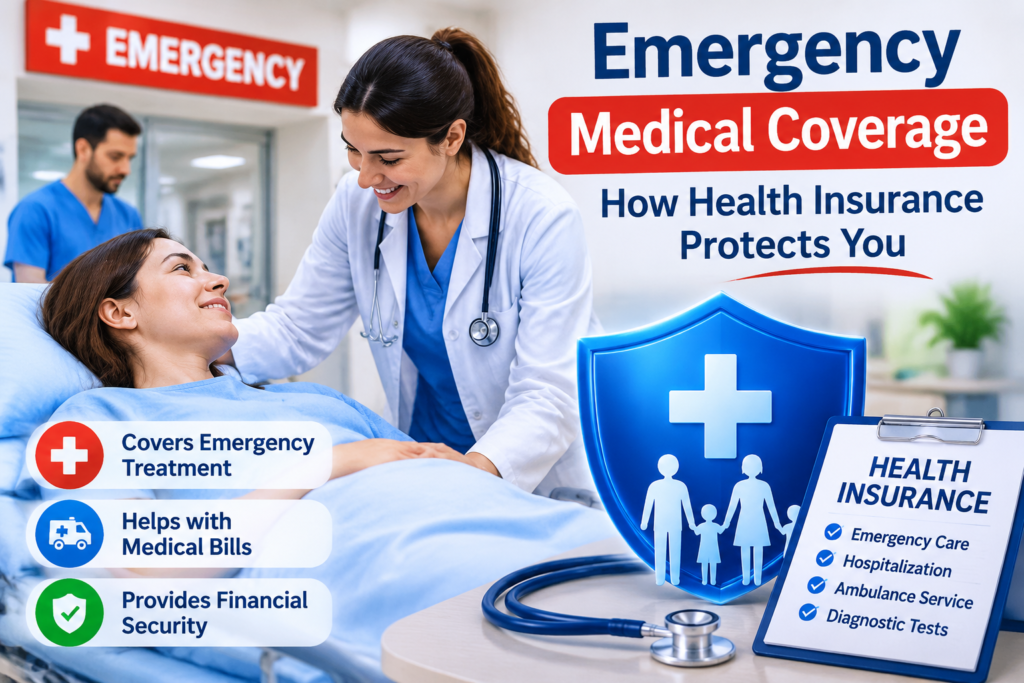
Image title: Emergency Medical Coverage Guide
Image alt text: Emergency Medical Coverage protecting patients during urgent hospital treatment
Image caption: Emergency Medical Coverage can help pay eligible emergency healthcare expenses, depending on your insurance policy.
Image description: Learn how Emergency Medical Coverage may help individuals and families manage eligible emergency room visits, ambulance services, hospital treatment, and unexpected medical bills.
Suggested Excerpt
Emergency Medical Coverage can help protect you from unexpected healthcare costs after an accident or sudden illness. Learn about emergency benefits, insurance costs, exclusions, claims, and how to choose the right health insurance plan.
For more information, read our guide to Affordable Health Insurance Options for Individuals and Families.
You can also learn how to choose suitable protection in our guide to Family Medical Insurance.
If you are planning to travel abroad, explore our guide to International Health Insurance for Expats.