
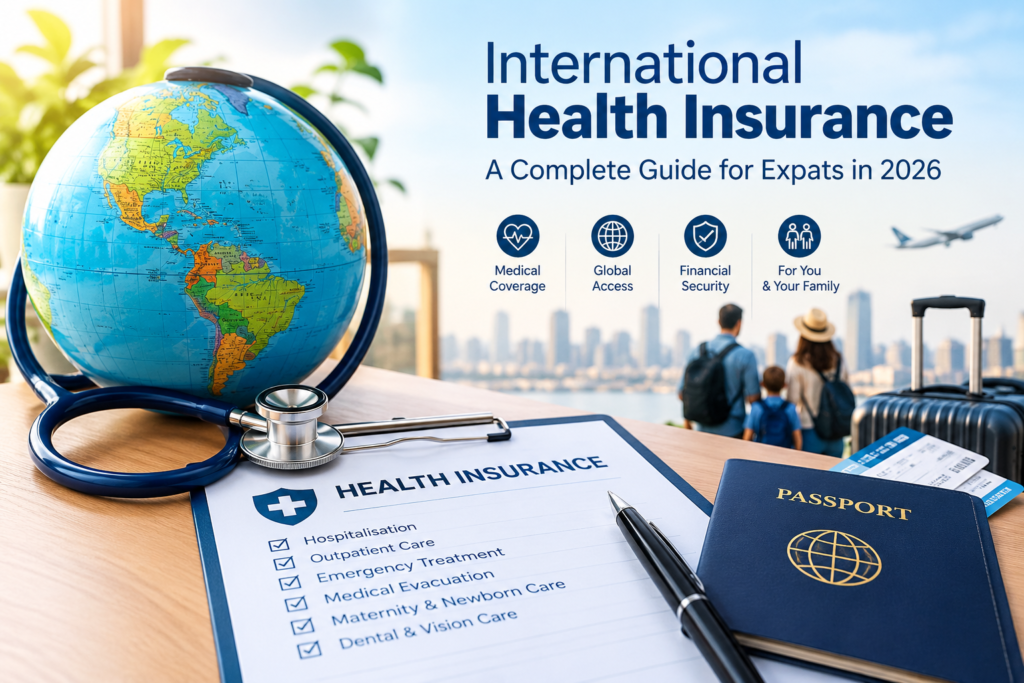
Moving to another country can create exciting opportunities for work, education, retirement, and personal growth. However, living abroad also means understanding a new healthcare system and preparing for unexpected medical expenses. Whether you are moving alone or with your family, choosing the right health insurance is an important part of planning your international journey.
International health insurance helps expatriates access eligible medical treatment outside their home country. Depending on the policy, it may cover hospitalisation, specialist consultations, diagnostic tests, prescription medicines, and emergency medical services. Some comprehensive plans also offer maternity benefits, dental care, and emergency medical evacuation.
In 2026, expats have different insurance options depending on their destination, budget, health needs, and residency status. This guide explains how international health insurance works, what it covers, how much it may cost, and how to choose suitable coverage for life abroad.
What Is International Health Insurance?
International health insurance is a medical insurance policy designed for people who live, work, study, or spend extended periods outside their home country. It is also commonly called international private medical insurance or expat health insurance.
Unlike ordinary travel insurance, which generally focuses on short trips and unexpected emergencies, international health insurance can provide ongoing medical coverage while living abroad. The exact benefits depend on the insurer, policy terms, geographical coverage, and selected plan.
For example, a professional moving from Pakistan to Germany may need medical coverage that meets German requirements. Similarly, someone relocating from the United Kingdom to the United Arab Emirates may need insurance that provides access to suitable healthcare providers in their new location.
International health insurance can be particularly useful for people who move between countries frequently. However, not every policy covers every country, and some plans exclude expensive healthcare markets or impose specific restrictions.
Why Do Expats Need International Health Insurance in 2026?
Healthcare systems vary significantly around the world. Some countries provide publicly funded healthcare to eligible residents, while others require private insurance or employer-sponsored medical coverage in certain circumstances.
International health insurance can help expatriates manage these differences.
1. Access to Medical Treatment Abroad
International health insurance may provide access to hospitals, doctors, specialists, and diagnostic facilities in your country of residence. Depending on your plan, you may also receive coverage when visiting other countries within the policy’s geographical limits.
2. Protection Against Unexpected Medical Expenses
Hospital admissions, surgery, and specialist treatment can be expensive. A suitable policy can reduce the financial burden of eligible medical expenses, subject to deductibles, copayments, exclusions, and benefit limits.
3. More Healthcare Choices
Some international health insurance plans provide access to private hospitals and specialist networks. This can give policyholders additional healthcare options, depending on the availability of providers and the terms of their coverage.
4. Protection for Families Living Abroad
Families relocating overseas may need medical coverage for parents and children. Family policies can include benefits for consultations, hospital treatment, and emergency care. Maternity and newborn coverage may be available under certain plans.
5. Emergency Medical Assistance
Some insurers provide round-the-clock assistance services to help policyholders locate medical facilities and coordinate eligible emergency treatment. Medical evacuation may also be included or available as an additional benefit.
What Does International Health Insurance Cover?
International health insurance benefits vary by provider and policy level. Basic plans may focus on major medical expenses, while comprehensive plans can include outpatient care and additional healthcare services.
Inpatient and Hospital Treatment
Inpatient coverage generally applies when a patient is admitted to a hospital and requires an overnight stay. Depending on the policy, benefits may include hospital accommodation, surgery, intensive care, specialist fees, and eligible medicines administered during treatment.
Before choosing a plan, check its annual benefit limit and any restrictions on hospital charges.
Outpatient Consultations
Outpatient care includes medical treatment that does not normally require an overnight hospital stay. It may cover general practitioner visits, specialist consultations, laboratory tests, diagnostic imaging, and prescribed medicines.
Outpatient benefits are not automatically included in every policy. Some insurers offer them as optional coverage.
Emergency Medical Treatment
Emergency medical coverage may help pay for eligible treatment following a sudden illness or injury. However, insurers may require policyholders to use approved facilities or notify the insurer as soon as reasonably possible.
Always check the rules for emergency treatment outside your main country of coverage.
Medical Evacuation and Repatriation
Medical evacuation involves transporting a patient to an appropriate medical facility when necessary treatment is unavailable locally. Repatriation may involve medically appropriate transportation to another country or back to the country of residence.
These benefits can be particularly important for expatriates working in remote areas or living in locations with limited specialist healthcare services.
Maternity and Newborn Care
Some international health insurance policies cover pregnancy-related consultations, childbirth, and eligible newborn treatment. However, maternity benefits often have waiting periods, financial limits, and specific eligibility conditions.
If you are planning a pregnancy, confirm the maternity waiting period and newborn enrolment requirements before purchasing a policy.
Mental Health Services
Depending on the plan, mental health benefits may include eligible psychotherapy, psychiatric consultations, and inpatient treatment. Coverage can be subject to session limits, annual allowances, and medical necessity requirements.
Dental and Vision Care
Routine dental treatment, major dental procedures, eye examinations, and prescription glasses may be covered by higher-tier policies or optional benefits. Always confirm these details before making a purchase.
What Is Usually Excluded From International Health Insurance?
Understanding exclusions is just as important as understanding the benefits. A policy may provide extensive medical protection but still exclude certain treatments or impose restrictions.
Common exclusions or limitations may include:
- Pre-existing medical conditions that the insurer excludes or restricts.
- Cosmetic procedures that are not medically necessary.
- Experimental treatments that do not meet the insurer’s criteria.
- Routine dental and vision services when these benefits are not included.
- Pregnancy-related expenses during an applicable waiting period.
- Certain hazardous activities, depending on the policy.
- Treatment outside the permitted geographical coverage area.
- Expenses exceeding annual benefit limits.
- Planned treatment that requires prior authorisation but has not been approved.
These exclusions are examples, not universal rules. Read the policy documents carefully and ask the insurer to explain any unclear conditions.
How Much Does International Health Insurance Cost in 2026?
The cost of international health insurance depends on several factors, including your age, destination, medical history, selected benefits, and geographical coverage.
There is no single premium that applies to every expatriate. Insurers assess applicants differently, and prices can vary significantly between countries and coverage levels.
Factors That Affect Insurance Premiums
Age: Premiums often increase as applicants get older.
Country of residence: Healthcare costs and local insurance regulations can influence pricing.
Area of coverage: Worldwide policies that include expensive healthcare markets may cost more than plans with regional coverage.
Medical history: Underwriting decisions can affect eligibility, exclusions, or premiums.
Coverage level: Comprehensive plans generally cost more than policies focused on major medical expenses.
Deductible: Choosing a higher deductible may reduce the premium but increases the amount you must pay yourself.
Family size: Adding a partner or children affects the overall policy price.
Optional benefits: Maternity, dental, vision, and outpatient coverage can increase premiums.
How to Compare Insurance Quotes
Do not select a policy based only on its monthly premium. Compare annual benefit limits, deductibles, copayments, hospital networks, geographical coverage, and exclusions.
Request quotations from multiple insurers using the same coverage requirements. This makes it easier to understand the differences between policies and identify the option that best fits your needs.
International Health Insurance vs. Travel Insurance
International health insurance and travel insurance both offer medical protection abroad, but they serve different purposes.
International health insurance is generally designed for people living overseas who need ongoing medical coverage. Travel insurance usually focuses on short-term trips and may include emergency medical treatment, trip cancellation, lost baggage, and travel disruption benefits.
For example, someone spending several months or years working abroad may benefit from international medical insurance. Someone taking a two-week holiday may find that suitable travel insurance meets their needs.
However, the right option depends on your existing insurance, destination, length of stay, and local requirements.
How to Choose the Best International Health Insurance Plan
Choosing the right international health insurance policy requires careful research. The best plan is not necessarily the cheapest or the one with the most benefits. It is the policy that fits your medical needs, destination, and budget.
1. Check Your Destination’s Requirements
Research whether your visa, residency status, employer, or local law requires a specific type of health insurance. A policy suitable for one country may not satisfy the requirements of another.
2. Decide Where You Need Coverage
Some plans cover one country or region, while others offer worldwide protection. Check whether your country of residence and any planned travel destinations are included.
3. Compare Annual Benefit Limits
The annual benefit limit determines the maximum amount payable under the policy during the relevant period, subject to its terms.
Consider whether the limit is sufficient for hospitalisation, surgery, and other major medical expenses in your destination.
4. Review Pre-Existing Condition Rules
Declare your medical history accurately. Depending on the insurer, pre-existing conditions may be covered, excluded, or subject to additional restrictions.
Obtain written confirmation of any important condition that the insurer agrees to cover.
5. Understand Deductibles and Copayments
A deductible is the amount you pay toward eligible expenses before the insurer begins paying according to the policy. A copayment is your share of a covered expense.
Compare these amounts alongside the premium to understand your potential out-of-pocket costs.
6. Check the Hospital Network
Look for hospitals and specialists near your home or workplace. Confirm whether direct billing is available, whether referrals are required, and whether planned treatment needs prior approval.
7. Read the Renewal Conditions
Review the policy’s renewal terms, age limits, premium adjustment rules, and options if you move to another country.
Do not assume your policy will remain available at the same price or under identical conditions.
International Health Insurance for Expats in Popular Destinations
Healthcare access and insurance requirements vary by country. Expats should understand local rules before choosing international medical coverage.
United States
Healthcare in the United States can be expensive, making medical insurance an important consideration for expatriates.
Check whether your international health insurance policy includes treatment in the United States, which hospitals are covered, and whether the plan meets applicable requirements.
Some international policies exclude the United States to reduce premiums, while others offer worldwide coverage that includes it.
United Kingdom
Expats in the United Kingdom should distinguish between NHS healthcare access, eligibility for public services, employer-provided benefits, and private medical insurance.
Immigration status and individual circumstances can affect access to healthcare services. Before buying international coverage, check whether you need it for personal preference, employment, or a specific residency requirement.
Germany
Germany has a structured health insurance system, and appropriate medical coverage is generally required for residents.
Depending on employment status, income, and other eligibility rules, individuals may qualify for statutory health insurance or private health insurance.
Expats should not assume that an international insurance policy automatically meets German requirements. Verify eligibility and acceptance with the relevant insurer or official authority before relying on a policy for a residence application.
United Arab Emirates
Healthcare insurance requirements in the UAE depend on the emirate and the individual’s circumstances.
Employers may provide medical insurance, but benefits, provider networks, and dependent coverage can vary. International health insurance may offer additional flexibility for people who travel frequently or require coverage across multiple countries.
Check how an international policy coordinates with any locally required insurance.
Other European Countries
France, Italy, Spain, Portugal, and other European countries have different healthcare systems and insurance requirements.
The appropriate arrangement depends on residency status, employment, family circumstances, and local rules. Before relocating, verify official requirements rather than assuming one international policy will be accepted throughout Europe.
International Health Insurance for Families
Moving abroad as a family creates additional healthcare considerations. Parents should compare family policies that provide appropriate benefits for adults and children.
Review paediatric consultations, emergency treatment, prescription benefits, hospital accommodation, maternity coverage, and newborn enrolment deadlines.
Ask whether every family member must complete a separate medical questionnaire. You should also confirm what happens if one family member needs ongoing treatment or the family relocates during the policy year.
A well-chosen family policy can help simplify healthcare planning while living overseas.
How to Buy International Health Insurance Online
Buying international health insurance online can simplify the process of comparing providers and requesting quotations.
Follow these steps before purchasing a policy:
- Identify your needs: List your destination, expected length of stay, family members, and preferred healthcare services.
- Research insurers: Review policy documents, geographical restrictions, claims procedures, and provider networks.
- Request comparable quotes: Use the same deductible, benefit requirements, and area of coverage when comparing plans.
- Complete medical declarations: Provide accurate information about your health and medical history.
- Review the policy wording: Confirm exclusions, waiting periods, benefit limits, and prior authorisation rules.
- Check local acceptance: Verify that the proposed policy satisfies applicable visa or residency requirements.
- Keep your documents: Save the policy certificate, emergency contact details, benefit schedule, and claims instructions.
Do not rely only on marketing summaries. Ask the insurer to clarify important restrictions in writing before purchasing the policy.
Common Mistakes to Avoid When Buying Expat Health Insurance
Many expatriates focus on the premium and overlook details that matter when they need medical treatment.
Avoid these common mistakes:
- Choosing the cheapest policy without checking benefit limits.
- Assuming all pre-existing conditions are covered.
- Confusing travel insurance with long-term medical insurance.
- Failing to check whether your destination is covered.
- Ignoring maternity waiting periods and newborn enrolment conditions.
- Overlooking deductibles, copayments, and reimbursement rules.
- Assuming every hospital will bill the insurer directly.
- Buying a policy without checking local legal or immigration requirements.
- Providing incomplete or inaccurate medical information.
Reviewing these details before purchase can help you avoid misunderstandings and select coverage that better suits your circumstances.
Frequently Asked Questions About International Health Insurance
1. What is international health insurance?
International health insurance is medical coverage designed for people living outside their home country. Depending on the policy, it may cover hospitalisation, outpatient treatment, specialist consultations, prescription medicines, and emergency medical services.
2. Is international health insurance worth it for expats?
It can be valuable for expats who need ongoing medical coverage abroad, access to private healthcare, or protection against eligible medical expenses. Whether it is worthwhile depends on local healthcare access, existing insurance, personal needs, and policy cost.
3. How much does international health insurance cost in 2026?
The price depends on age, destination, medical history, benefit limits, geographical coverage, deductibles, and optional benefits. Request personalised quotations from insurers to obtain accurate current prices.
4. Does international health insurance cover pre-existing conditions?
Some policies may cover pre-existing conditions, while others exclude them or impose restrictions. Coverage depends on medical underwriting and the specific contract. Disclose your medical history accurately and obtain confirmation of any accepted conditions.
5. Can I use international health insurance in multiple countries?
Many international plans offer coverage in several countries, but the permitted geographical area varies. Check whether your country of residence, travel destinations, and planned treatment locations are included.
6. Does international health insurance cover maternity care?
Some plans cover eligible pregnancy and childbirth expenses. Waiting periods, benefit limits, and exclusions may apply, so confirm the terms before purchasing a policy.
7. Is international health insurance the same as travel insurance?
No. International health insurance is generally designed for ongoing healthcare while living abroad. Travel insurance usually focuses on short-term trips and may include emergency medical treatment, cancellation, or travel disruption benefits.
8. Can my employer provide international health insurance?
Yes. Some employers arrange international medical insurance for employees working overseas. Ask about family coverage, geographical limits, deductibles, exclusions, and what happens when your employment ends.
9. Does international health insurance cover emergency evacuation?
Some plans include emergency medical evacuation or offer it as an optional benefit. Check the circumstances in which evacuation is authorised, eligible destinations, and whether prior approval is required.
10. How do I choose the best international health insurance?
Compare geographical coverage, annual benefit limits, inpatient and outpatient benefits, exclusions, pre-existing condition rules, hospital networks, deductibles, and renewal conditions. Also confirm that the policy meets your destination country’s requirements.
Conclusion
International health insurance is an important consideration for expatriates planning to live, work, study, or retire abroad in 2026. The right policy can provide access to eligible medical treatment across borders and help manage the financial risks associated with healthcare expenses.
However, not every plan offers the same protection. Coverage limits, exclusions, medical underwriting, geographical restrictions, and local insurance requirements can significantly affect the value of a policy.
Before making a decision, compare several quotations, read the complete policy documents, and verify the requirements of your destination country. Consider your healthcare needs, family circumstances, and budget rather than choosing a policy based on price alone.
With careful research and a clear understanding of the benefits, you can choose international health insurance that supports your health and gives you greater confidence while building your life abroad.
Official Resources and External Links
- CDC — Travel Health Insurance and Medical Evacuation Guidance: https://www.cdc.gov/yellow-book/hcp/health-care-abroad/travel-insurance.html
- U.S. Department of State — Travel Insurance Guidance: https://travel.state.gov/en/international-travel/planning/guidance/insurance.html
- Bupa Global — International Health Insurance for Expats: https://www.bupaglobal.com/en/for-you/expat
In links ko article ke end mein add karein. Ye standard links hain; HTML mein nofollow attribute add na karein agar aap normal DoFollow links rakhna chahte hain.
WordPress Image Details
Image Title: International Health Insurance for Expats 2026
Image ALT Text: International Health Insurance: A Complete Guide for Expats in 2026
Image Caption: Compare international health insurance options for expats living abroad in 2026.
Image Description: A guide to international health insurance, covering expat medical plans, global healthcare access, policy benefits, and insurance considerations for 2026.
Internal Linking Suggestions
Agar aapki website par ye articles maujood hain, to in relevant phrases par links add karein:
- Health Insurance in Europe
- Private Health Insurance in the USA, UK, Germany and Italy
- Health Insurance for International Students


1 comment