
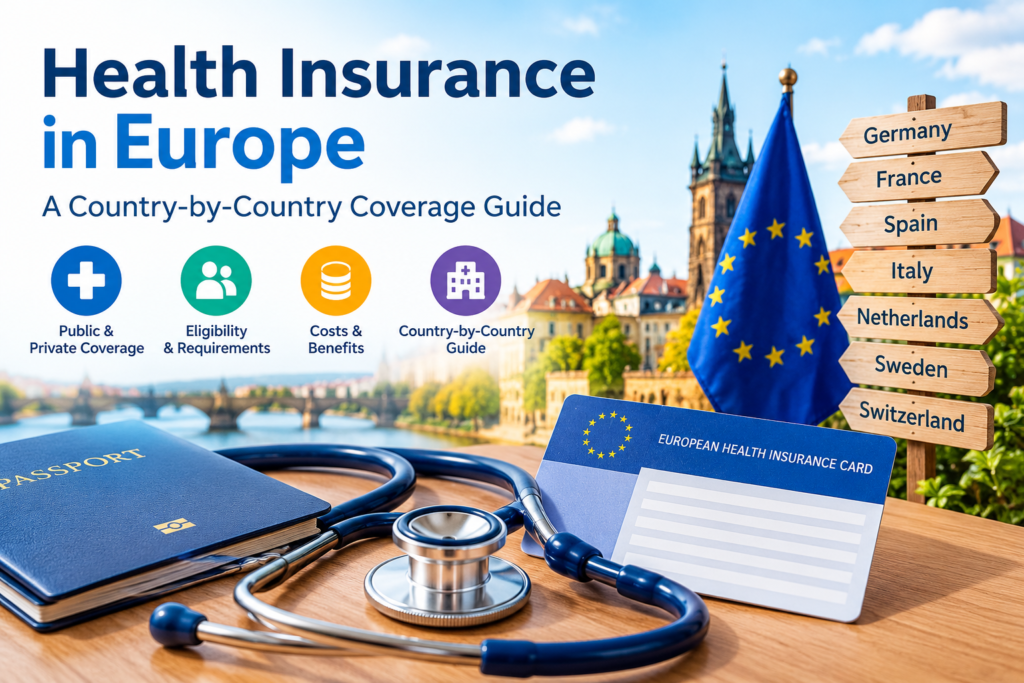
Health insurance in Europe is an important consideration for residents, international students, expatriates, employees, and travelers. European countries are widely known for their healthcare systems, but the way people access medical services and pay for treatment varies significantly from one country to another. Some countries operate primarily through public health insurance, while others combine government-funded healthcare with compulsory insurance policies provided by regulated insurers.
Understanding health insurance in Europe can help individuals make informed decisions about medical coverage, healthcare expenses, eligibility requirements, and private insurance options. Whether you are planning to relocate to Germany, study in France, retire in Spain, or work in the Netherlands, knowing how the local healthcare system works can make your transition easier.
Although several European countries provide extensive healthcare coverage, medical services are not necessarily free for everyone. Eligibility may depend on residency, employment, contributions, immigration status, and enrollment in the appropriate insurance scheme. Some services, including dental care, prescriptions, and specialist appointments, may also involve additional payments.
This country-by-country guide explains how health insurance in Europe works, explores healthcare arrangements in major European destinations, and highlights the differences between public and private coverage. It also explains what expatriates, international students, and visitors should consider before choosing a suitable insurance plan.
How Health Insurance in Europe Works
Health insurance systems across Europe generally fall into three broad categories: tax-funded public healthcare, social health insurance, and mixed public-private arrangements. Although these systems share the goal of improving access to medical treatment, their funding methods and eligibility requirements differ.
Public Healthcare Systems
Public healthcare is funded mainly through general taxation or compulsory social insurance contributions. Eligible residents can typically access essential medical services through public providers, although waiting times, referral requirements, and patient charges vary.
In tax-funded systems, governments finance much of healthcare through public revenue. In social insurance systems, employers, employees, and sometimes the government contribute toward healthcare financing.
Public coverage can include general practitioner appointments, hospital treatment, emergency services, maternity care, and certain prescription medicines. However, the exact benefits depend on national rules.
Private Health Insurance
Private health insurance provides coverage through an insurance company rather than relying exclusively on public healthcare arrangements. Depending on the policy, it may cover private hospital treatment, specialist appointments, additional services, or accommodation in private facilities.
Some countries allow eligible individuals to use private insurance as an alternative to public coverage. In others, private insurance is mainly used to supplement the public system.
Before purchasing a policy, review its exclusions, waiting periods, annual limits, deductibles, reimbursement rules, and geographical coverage.
Who Is Eligible for Healthcare Coverage?
Eligibility for health insurance in Europe depends on the country and the individual’s circumstances. Citizens and legal residents may qualify for public coverage, while employees might be enrolled through employment-related contributions or compulsory insurance arrangements.
International students may need to register with a public scheme or purchase an approved private policy. Expatriates should verify the rules that apply to their residence permit and employment status.
Tourists generally cannot assume that ordinary public healthcare coverage will pay for all medical treatment during a temporary visit. Travel medical insurance may be necessary, particularly for unexpected emergencies and medical repatriation.
Health Insurance in Europe: Country-by-Country Guide
European healthcare systems differ in their funding, registration procedures, patient contributions, and insurance requirements. The following overview explains the general arrangements in ten popular destinations.
1. Health Insurance in Germany
Germany operates a social health insurance system with a substantial private insurance sector. Many employees are covered by statutory health insurance, known as Gesetzliche Krankenversicherung (GKV), while eligible individuals may qualify for private health insurance.
Statutory insurance contributions are generally based on income, subject to applicable contribution rules and limits. Employers normally contribute toward eligible employees’ statutory insurance costs.
Publicly insured patients can access a broad range of medical services, including general practitioner appointments, hospital treatment, preventive care, and many prescription medicines. Some treatments involve statutory copayments or other patient charges.
Private health insurance is available to eligible groups, including certain self-employed people, civil servants, and employees who meet the applicable requirements. Premiums and benefits depend on the insurer, contract, and individual circumstances.
New residents should arrange appropriate coverage promptly. Students, workers, freelancers, and family members may face different eligibility and enrollment requirements.
2. Health Insurance in France
France combines statutory health insurance with supplementary private coverage. The public system, commonly associated with Assurance Maladie, reimburses eligible healthcare expenses according to national rules.
Many residents purchase complementary insurance, known as mutuelle, to help cover expenses that statutory insurance does not fully reimburse. Depending on the contract, supplementary coverage may contribute toward dental treatment, glasses, hospital charges, and specialist fees.
People who work or reside in France must establish their eligibility for the relevant public healthcare arrangements. Registration procedures and supporting documents depend on individual circumstances.
France offers extensive healthcare services, but patients may still encounter deductibles, copayments, excess fees, or services that are not fully covered. Understanding reimbursement rates is therefore important when comparing policies.
International students should check whether their circumstances allow them to access the French public system and whether additional insurance is advisable or required.
3. Health Insurance in Spain
Spain has a tax-funded public healthcare system that provides extensive medical services to eligible residents. The national system operates through regional health authorities, so registration procedures and certain administrative arrangements can differ between autonomous communities.
Eligible individuals may receive primary care, hospital services, specialist treatment, maternity care, and other medically necessary services through the public system.
Access generally depends on legal and administrative status, including the applicable residence, employment, or entitlement rules. Foreign residents should not assume that a residence permit automatically grants access to every healthcare service.
Private health insurance is also popular among expatriates and other residents. Some people choose private plans for access to private hospitals, additional provider choices, or potentially shorter waiting times for particular appointments.
Prescription charges and access to certain services depend on the person’s circumstances and the applicable regional and national rules. Before moving to Spain, check whether public coverage, private insurance, or a combination is appropriate for your situation.
4. Health Insurance in Italy
Italy provides a national health service known as the Servizio Sanitario Nazionale (SSN). It is funded primarily through taxation and administered through regional healthcare authorities.
Eligible residents can register with the public system to access services such as primary care, hospital treatment, specialist consultations, and preventive healthcare. The availability and organization of certain services can vary between regions.
Some services involve patient contributions, commonly called ticket payments. Exemptions may apply according to age, income, medical conditions, or other eligibility criteria.
Foreign nationals must determine whether they qualify for compulsory or voluntary registration, or whether they need alternative coverage. The applicable rules can depend on employment, residence status, and international agreements.
Private health insurance can help cover additional services or provide access to private providers. However, it is important to confirm whether a policy meets any immigration or residence requirements before purchasing it.
5. Health Insurance in the Netherlands
The Netherlands uses a regulated health insurance system in which people who are subject to the Dutch insurance requirement generally purchase a basic policy from a private insurer.
The government defines the standard basic insurance package, while insurers administer policies under national rules. Basic coverage includes a broad range of essential healthcare services, such as general practitioner care, hospital treatment, and many medically necessary services.
Adults generally pay a nominal premium to their insurer and may also be responsible for the statutory annual deductible for many covered services. Some services, including general practitioner consultations, are treated differently under deductible rules.
Supplementary insurance is available for benefits outside the basic package, including certain dental services and additional treatments. The scope of supplementary coverage depends on the contract.
People moving to the Netherlands for employment should check whether they are required to obtain Dutch basic health insurance and when that obligation begins. Exceptions and special rules may apply to particular groups.
6. Health Insurance in Switzerland
Switzerland requires people who are resident in the country to obtain basic health insurance, subject to applicable exemptions and deadlines. Although insurers are private organizations, the basic insurance package is regulated by law.
Basic insurance covers a defined range of healthcare services, including medically necessary treatment, subject to the applicable rules and patient cost-sharing arrangements.
Unlike systems where contributions are primarily linked to salary, Swiss premiums are generally influenced by factors such as the insurer, residence area, age category, and selected insurance model. Premiums can therefore vary substantially.
Policyholders usually pay a deductible and additional coinsurance for eligible services, with legal limits and exceptions applying to certain situations. Subsidies may be available to eligible residents with limited incomes.
Supplementary insurance can provide additional benefits, but acceptance and coverage conditions differ from those of compulsory basic insurance. New residents should review enrollment deadlines and local requirements carefully.
7. Health Insurance in Sweden
Sweden operates a predominantly tax-funded healthcare system managed through regional authorities. People registered as residents generally access publicly organized healthcare under the applicable national and regional rules.
Services include primary care, specialist treatment, hospital care, maternity services, and preventive healthcare. Patients usually pay regulated fees for many outpatient visits, although annual high-cost protection schemes limit eligible expenses.
Prescription medicines are also subject to a separate cost-protection framework. Exact patient charges and administrative arrangements can change according to national rules.
Private health insurance exists, but it is generally supplementary rather than a replacement for the public system for most residents.
Foreign workers, students, and temporary residents should confirm their eligibility. Access may depend on population registration, residence status, and the nature and duration of their stay.
8. Health Insurance in Denmark
Denmark has a largely tax-funded healthcare system administered through national and regional public institutions. Eligible residents generally register with the civil registration system and receive access to public healthcare arrangements.
The public system typically covers general practitioner services, hospital treatment, and medically necessary specialist care under established referral procedures.
Many consultations with general practitioners and hospital services are provided without direct charges to eligible residents. However, certain services, including much adult dental care and some prescription medicines, may require patient payments.
Private insurance is available for people who want additional services or access to private treatment arrangements. Coverage depends on the insurer and policy conditions.
Foreign nationals moving to Denmark should verify their registration requirements and healthcare eligibility. Temporary visitors and people who have not completed the relevant registration procedures may face different rules from established residents.
9. Health Insurance in Portugal
Portugal provides public healthcare through its National Health Service, known as the Serviço Nacional de Saúde (SNS). The system is funded primarily through taxation and serves eligible residents under national rules.
Public healthcare includes primary care, hospital services, emergency treatment, and specialist care. Access and appointment availability can vary depending on location, demand, and the particular service.
Some services and prescription medicines may involve charges, although exemptions and special arrangements apply to certain groups and treatments.
Foreign residents should determine whether they are eligible to register with the SNS and what documentation is required. Eligibility can depend on residence status and other circumstances.
Private health insurance is also available and can provide access to participating private clinics and hospitals. Before selecting a policy, compare provider networks, waiting periods, annual limits, and exclusions.
10. Health Insurance in Poland
Poland operates a public health insurance system administered through the National Health Fund, commonly known as NFZ. Public healthcare financing relies substantially on insurance contributions and public funding.
People who qualify for coverage can access eligible healthcare services through providers operating under the public system. Coverage may include primary care, specialist consultations, hospital treatment, and other medically necessary services.
Eligibility can depend on employment, insurance contributions, family-member status, student circumstances, or another recognized entitlement. Foreign residents should confirm which rules apply to them.
Private healthcare is also widely available. Private insurance or subscription-based medical services may offer access to selected clinics and appointments, but they do not automatically replace public insurance obligations.
Before relocating to Poland, review your registration options and confirm whether your employment or residence arrangement requires public insurance contributions.
Public vs. Private Health Insurance in Europe
Choosing between public and private health insurance depends on your eligibility, budget, healthcare needs, and country of residence.
Public healthcare often provides broad access to essential medical services and protects eligible residents from the full cost of expensive treatment. In many systems, contributions are linked to taxation or earnings, while other countries use regulated premiums.
Private insurance may offer additional provider choices, access to private facilities, or coverage for services that are excluded or only partly covered by the public system. However, premiums can be higher, and policies may include exclusions, waiting periods, and reimbursement limits.
Some countries require specific forms of public or private insurance, meaning individuals cannot freely choose one system instead of the other.
Before making a decision, compare the following factors:
- Eligibility: Determine whether you qualify for the national healthcare system.
- Monthly expenses: Compare premiums, contributions, deductibles, and copayments.
- Covered services: Review hospital treatment, prescriptions, specialist visits, and dental care.
- Waiting times: Consider access to appointments and specialist treatment.
- Provider access: Check whether your preferred hospitals and doctors are included.
- Policy restrictions: Review exclusions, annual limits, and reimbursement procedures.
The most suitable option is the one that meets your legal obligations and provides appropriate coverage for your circumstances.
How Much Does Health Insurance Cost in Europe?
The cost of health insurance in Europe varies considerably by country, insurance model, age, income, residence status, and policy benefits. There is no single premium that applies across the continent.
In some countries, healthcare is primarily financed through taxation, meaning eligible residents do not pay a separate monthly premium for the core public system. They may still pay taxes, social contributions, prescription charges, or other patient fees.
In countries with compulsory insurance arrangements, individuals may pay regular premiums to insurers. Switzerland, for example, uses regulated basic insurance premiums that can differ by location, insurer, and age category.
Germany and other social insurance systems generally link statutory contributions to earnings, subject to the applicable rules. Private insurance prices can depend on factors such as age, selected benefits, and underwriting conditions.
To estimate your likely healthcare expenses, consider:
- Monthly premiums or mandatory contributions.
- Employer contributions, where applicable.
- Deductibles and copayments.
- Prescription and dental expenses.
- Supplementary insurance premiums.
- Coverage limits and possible out-of-pocket costs.
Always obtain current quotes and confirm the official rules for your destination. Comparing only monthly premiums can be misleading because policies with lower premiums may involve higher deductibles or more limited benefits.
Health Insurance Requirements for Expats and International Students
Expatriates and international students should investigate health insurance requirements before relocating to Europe. Requirements can differ according to nationality, visa category, length of stay, employment, and local residence regulations.
Health Insurance for Expats
Expats moving for employment may become eligible or required to enroll in the destination country’s statutory insurance system. The correct arrangement depends on whether they are employees, self-employed, posted workers, retirees, or family members.
Before departure, ask your employer about enrollment procedures and determine when your coverage begins. If you are self-employed or moving without a job, confirm whether you can join the public system or need an approved private policy.
Also check whether your existing insurance covers you abroad. A policy designed for your home country may not provide comprehensive protection after you establish residence elsewhere.
Health Insurance for International Students
International students may qualify for public health insurance, student-specific schemes, or approved private policies. The requirements depend on the destination country, educational program, age, and residence status.
Some universities provide guidance about approved insurers, while others require students to arrange their own coverage.
Before paying for a policy, confirm that it meets any visa or residence requirements and covers the full period of your stay. Check whether routine medical treatment, hospital care, prescription medicines, and pre-existing conditions are included.
Health Insurance for Tourists
Tourists should distinguish travel medical insurance from long-term health insurance. Travel insurance can help pay for unexpected medical emergencies, emergency transportation, and other covered travel-related expenses.
Travelers visiting countries in the Schengen Area may need insurance that satisfies the requirements applicable to their visa category. A European Health Insurance Card, where available to an eligible traveler, is not a substitute for comprehensive travel insurance and does not cover every medical expense.
Review your destination’s entry requirements before departure and keep your policy details accessible during your trip.
How to Choose the Right Health Insurance Plan
Selecting suitable health insurance in Europe requires more than comparing prices. You should first establish your eligibility and then assess the coverage you actually need.
Understand Your Legal Requirements
Check official government or health authority information to determine whether public enrollment is compulsory or whether a specific private policy is acceptable.
Compare Benefits and Exclusions
Read the policy documents carefully. Confirm coverage for hospital stays, consultations, diagnostic tests, medicines, mental health services, maternity care, and any ongoing treatment relevant to your needs.
Check Deductibles and Copayments
A policy may have a relatively low premium but require you to pay more when receiving treatment. Calculate the potential annual cost rather than focusing only on the advertised monthly price.
Confirm the Provider Network
If you choose private insurance, check which doctors, hospitals, and clinics participate in the plan. Confirm whether specialist referrals are required and whether treatment outside the network is reimbursed.
Review Waiting Periods
Some policies restrict access to certain benefits during an initial waiting period. This can be particularly important for dental treatment, maternity services, and elective procedures.
Keep Your Documents Updated
Maintain copies of your insurance certificate, policy conditions, identification documents, and registration information. Notify the insurer of changes in residence, employment, or other circumstances when required.
Taking these steps can help you avoid unexpected expenses and maintain appropriate medical coverage while living, studying, or traveling in Europe.
Frequently Asked Questions About Health Insurance in Europe
Is healthcare free in Europe?
Healthcare is not universally free across Europe. Eligible residents in some countries receive many public services without direct charges at the point of treatment, while others pay insurance premiums, social contributions, deductibles, copayments, or prescription charges.
Which European country has the best health insurance?
There is no single best system for everyone. The right choice depends on healthcare access, coverage, patient costs, waiting times, and personal circumstances. Germany, France, the Netherlands, Sweden, and other countries have different strengths and trade-offs.
Can foreigners get health insurance in Europe?
Yes, many foreign nationals can access health insurance in European countries. However, eligibility depends on employment, residence status, nationality, enrollment rules, and the specific country’s healthcare legislation.
Do international students need health insurance in Europe?
International students often need health coverage, and some countries require insurance that satisfies specific visa or residence conditions. Students should confirm the applicable rules with their university and relevant government authority before traveling.
Is private health insurance necessary in Europe?
Private health insurance is necessary for some people because of legal requirements or individual circumstances. In other countries, it is optional supplementary coverage. Check local rules before deciding whether a private policy is required.
Can tourists use public healthcare in Europe?
Tourists may receive emergency medical treatment, but the cost and eligibility rules vary. Visitors should not assume that public healthcare will cover all expenses. Travel medical insurance can help protect against unexpected medical bills.
What is the difference between public and private health insurance?
Public health insurance is funded or organized through government systems or statutory insurance arrangements. Private health insurance is provided under an insurance contract and may offer additional benefits or alternative provider access. The distinction and available options differ by country.
Does the European Health Insurance Card cover every medical expense?
No. The European Health Insurance Card provides eligible travelers with access to medically necessary state-provided healthcare during temporary stays in participating European countries, under the same conditions and costs that apply to locally insured people. It does not cover every expense, private treatment in all circumstances, or planned treatment undertaken specifically to receive care.
Conclusion
Health insurance in Europe varies from country to country, making it important to understand local healthcare arrangements before moving, studying, working, or traveling abroad. Germany and Poland use social insurance-based arrangements, the Netherlands requires basic insurance for most people subject to its rules, and countries such as Sweden, Denmark, and Spain rely substantially on tax-funded public healthcare.
France and Italy combine public healthcare arrangements with opportunities for supplementary private coverage, while Switzerland uses compulsory regulated basic insurance for most residents. Each system has its own eligibility requirements, patient charges, registration procedures, and coverage limitations.
The best way to choose health insurance in Europe is to identify your legal obligations, compare available benefits, review potential out-of-pocket expenses, and consult official healthcare authorities. By understanding the differences between public and private coverage, you can make a more informed decision and prepare for healthcare needs in your European destination.
Health Insurance Eligibility in Europe
Apne “Who Is Eligible for Healthcare Coverage?” section ke end par ye sentence add karein:
“Check the European Commission’s official guidance on health insurance coverage when living abroad to understand which country’s healthcare system may apply to your situation.”
Official source: European Commission / Your Europe.
Health insurance in Europe varies according to national legislation, residency status, employment, and the type of healthcare services required.
- Understanding health insurance in Europe is essential for anyone planning to live, study, or work abroad.
- The right health insurance in Europe depends on your residency status, employment, and healthcare needs.
- Comparing health insurance in Europe can help you understand the differences between public and private medical coverage.
- Before choosing health insurance in Europe, review the benefits and limitations of available insurance policies.
- Health insurance in Europe can provide financial protection against eligible medical expenses.
- International students should research health insurance in Europe before applying for a visa or residence permit.
- Expats can compare health insurance in Europe to find suitable coverage for their destination country.
- The cost of health insurance in Europe varies depending on national regulations and individual circumstances.
- Choosing health insurance in Europe requires careful consideration of premiums, deductibles, and covered services.
- Reliable information about health insurance in Europe can help residents make informed healthcare decisions.

1 comment