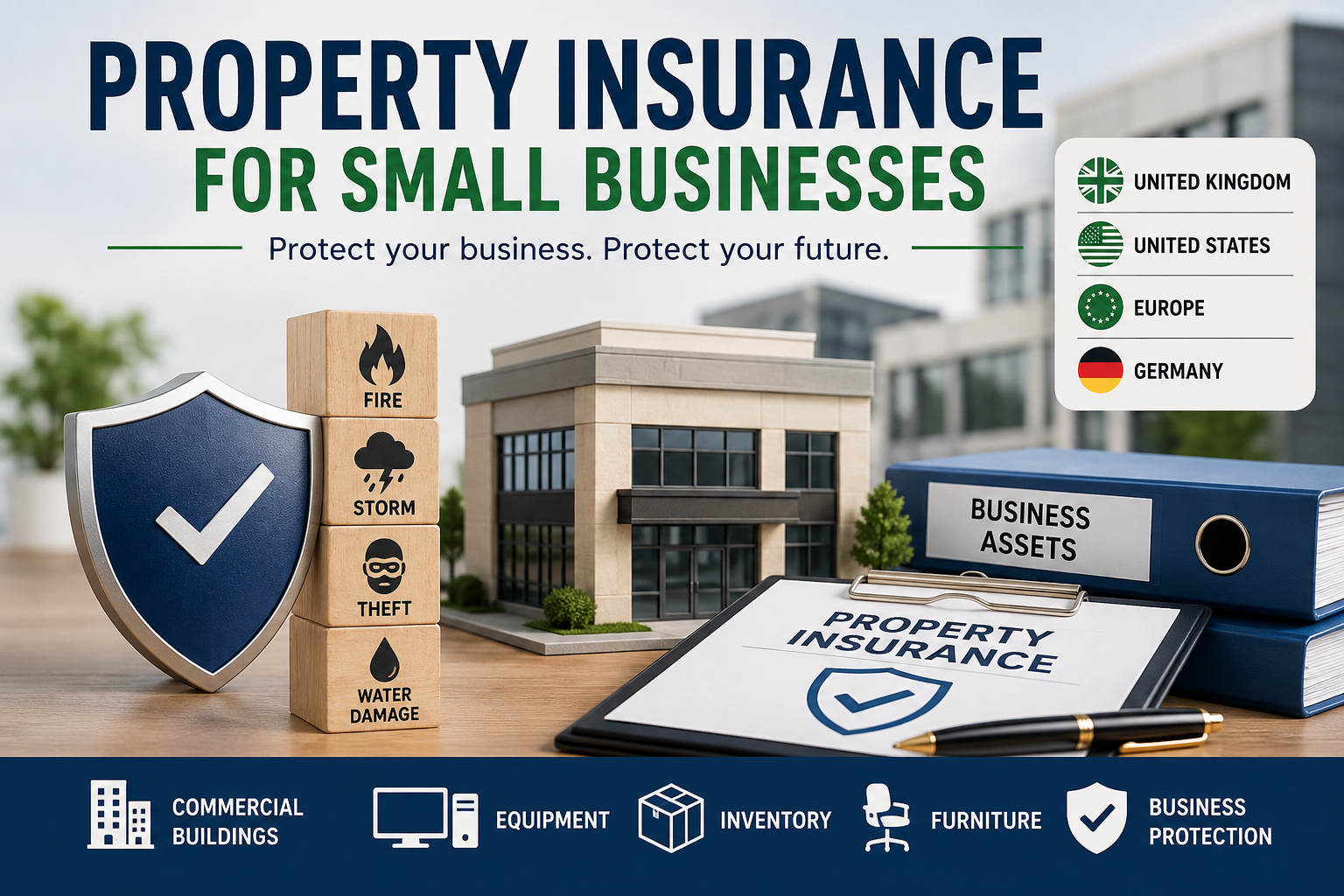
Running a business comes with opportunities, but it also comes with risks. A fSmall Business Insurance Europe: Choose the Right Policy for Complete Business ProtectionSmall Business Insurance Europe: Find Comprehensive Insurance Coverage for Startups, SMEs, and Growing Businesses Across Every European Countryire, flood, theft, storm, or accidental damage can seriously affect your operations and lead to significant financial losses. Property Insurance for Small Businesses helps protect your business premises, equipment, inventory, furniture, and other valuable assets from unexpected events. Whether you own a retail shop in London, a café in Berlin, a warehouse in Germany, or an office in New York, the right insurance policy can help your business recover quickly and continue operating.
Small businesses often have limited financial resources, making property damage more difficult to absorb than it is for larger companies. Without adequate insurance, replacing damaged equipment or rebuilding a workplace could require a substantial investment. Choosing the right property insurance policy gives business owners peace of mind and helps ensure long-term stability.
This guide explains everything you need to know about Property Insurance for Small Businesses, including what it covers, different policy types, average costs, and how to choose the best protection for businesses in the UK, USA, Europe, and Germany.
What Is Property Insurance for Small Businesses?
Property Insurance for Small Businesses is a type of commercial insurance designed to protect physical business assets against covered risks. These assets include buildings, offices, furniture, computers, machinery, tools, inventory, signs, and other equipment used to operate the business.
If a covered event such as fire, theft, vandalism, or severe weather damages your property, your insurer can help pay for repairs or replacement costs, subject to the policy terms and limits.
Property insurance is suitable for many business types, including:
- Retail stores
- Restaurants and cafés
- Offices
- Medical clinics
- Warehouses
- Manufacturing businesses
- Hotels and guest houses
- Salons and beauty clinics
- Professional service firms
- Small home-based businesses with valuable equipment
The level of protection depends on the policy you choose and the value of your business assets.
Why Every Small Business Needs Property Insurance
Every business depends on physical assets to generate income. Losing those assets due to an unexpected event can interrupt operations and reduce revenue.
Property insurance helps businesses by:
- Protecting buildings and office space
- Covering business equipment and machinery
- Replacing damaged furniture
- Protecting inventory and stock
- Reducing financial losses after disasters
- Helping businesses recover more quickly
- Increasing confidence among customers and lenders
Many landlords, banks, and commercial lease agreements also require businesses to carry property insurance before signing contracts or approving financing.
What Does Property Insurance Cover?
A standard Property Insurance for Small Businesses policy usually protects against a wide range of risks. Coverage may vary depending on the insurer and policy type, but common protections include:
Buildings
If your business owns its building, the policy may cover repair or rebuilding costs after damage caused by covered events such as fire, storms, explosions, or vandalism.
Office Equipment
Computers, printers, servers, telephones, desks, office furniture, and other workplace equipment can be covered against accidental loss or damage.
Business Inventory
Retail stores, wholesalers, and manufacturers rely on inventory. Property insurance can help replace stock that is damaged or stolen.
Machinery and Tools
Construction companies, workshops, and manufacturing businesses often depend on expensive machinery. Insurance helps reduce replacement costs if equipment is damaged.
Furniture and Fixtures
Shelving, display units, lighting, counters, cabinets, and seating areas may also be included under many policies.
Fire Damage
Fire remains one of the most common causes of commercial property losses. Property insurance can cover repair costs, replacement of damaged items, and cleanup expenses after a covered fire.
Theft and Burglary
Many policies provide protection if business property is stolen following a break-in. Some insurers also cover damage caused during the burglary.
Storm Damage
High winds, hail, lightning, and other severe weather events can cause major damage to business property. Property insurance often helps pay for repairs after covered storms.
Vandalism
Damage caused intentionally by third parties, such as broken windows, graffiti, or destroyed equipment, may also be covered.
What Is Not Covered?
Although Property Insurance for Small Businesses offers valuable protection, not every loss is automatically covered.
Many standard policies exclude:
- Normal wear and tear
- Poor maintenance
- Employee theft (unless additional coverage is purchased)
- Earthquakes in some regions
- Flood damage in certain locations
- War-related losses
- Intentional damage by the business owner
Always review your policy carefully to understand exclusions and consider optional endorsements if your business faces additional risks.
Types of Property Insurance for Small Businesses
Different businesses require different levels of protection. Insurers offer several types of property insurance designed for specific needs.
Commercial Property Insurance
This is the most common policy for businesses. It protects commercial buildings, offices, equipment, furniture, inventory, and other physical assets from covered risks such as fire, theft, storms, and vandalism.
Commercial property insurance is suitable for:
- Retail shops
- Restaurants
- Office-based businesses
- Medical practices
- Warehouses
- Manufacturing facilities
Business Contents Insurance
Business contents insurance focuses on the items inside your premises rather than the building itself.
Coverage typically includes:
- Computers
- Office furniture
- Documents
- Electronics
- Stock
- Display equipment
- Business tools
This type of insurance is especially useful for businesses that rent their premises because the landlord usually insures the building structure, while tenants are responsible for their own contents.
Equipment Breakdown Insurance
Modern businesses rely heavily on technology and machinery. Equipment breakdown insurance provides protection when essential equipment suffers mechanical or electrical failure.
Policies may cover:
- Air conditioning systems
- Boilers
- Production machinery
- Refrigeration equipment
- Electrical panels
- Computer servers
- Manufacturing equipment
Unexpected equipment failures can halt business operations, making this coverage particularly valuable for companies that depend on specialized machinery.
usiness Interruption Insurance
Property damage doesn’t only affect your building—it can also stop your business from earning money. Business Interruption Insurance helps replace lost income when your business must temporarily close because of a covered event such as a fire or severe storm.
This coverage can help pay for:
- Lost business income
- Employee salaries
- Rent or mortgage payments
- Utility bills
- Loan repayments
- Temporary relocation costs
For many small businesses, this protection can be just as important as repairing the building itself.
Landlord Property Insurance
If you own a commercial property and rent it to other businesses, landlord property insurance can protect your investment.
It generally covers:
- Building damage
- Permanent fixtures
- Fire and storm damage
- Water damage (where covered)
- Loss of rental income (depending on the policy)
This type of insurance is ideal for owners of offices, retail units, warehouses, and commercial buildings.
Property Insurance for Small Businesses in the UK
Small businesses across the UK face risks such as flooding, theft, vandalism, and fire. Although property insurance is not legally required for every business, it is strongly recommended.
Businesses commonly insured include:
- Retail stores
- Restaurants
- Coffee shops
- Offices
- Warehouses
- Hair salons
- Manufacturing businesses
Average Cost in the UK
Premiums depend on several factors, including:
- Property value
- Business type
- Location
- Claims history
- Security measures
- Level of coverage
Businesses in high-risk flood or crime areas often pay higher premiums than those in lower-risk locations.
Common Coverage
UK policies often include:
- Building insurance
- Contents insurance
- Stock protection
- Fire and theft cover
- Storm damage
- Business interruption cover
Property Insurance for Small Businesses in the USA
The United States has one of the largest commercial insurance markets in the world. Most lenders and landlords require businesses to carry property insurance before approving financing or lease agreements.
Businesses that should consider property insurance include:
- Retail shops
- Restaurants
- Medical clinics
- Warehouses
- Offices
- Auto repair shops
- Manufacturers
Common Risks
American businesses frequently insure against:
- Fire
- Tornadoes
- Hurricanes
- Theft
- Vandalism
- Water damage
- Smoke damage
Business Owner’s Policy (BOP)
Many insurers offer a Business Owner’s Policy (BOP) that combines:
- Commercial Property Insurance
- General Liability Insurance
- Business Interruption Insurance
A BOP is often more affordable than purchasing these policies separately.
Property Insurance for Small Businesses in Europe
Businesses throughout Europe operate under different regulations, but the importance of protecting commercial property remains the same.
Property insurance is widely used by:
- Hotels
- Restaurants
- Retail stores
- Offices
- Technology companies
- Healthcare providers
- Logistics businesses
Common Coverage
European property insurance often includes:
- Fire damage
- Theft
- Natural disasters
- Storm damage
- Water leaks
- Vandalism
- Equipment protection
Some businesses also purchase cyber insurance and liability insurance alongside property insurance for broader protection.
Property Insurance for Small Businesses in Germany
Germany has a strong insurance market, and many businesses invest in property insurance to protect valuable assets.
Commercial property insurance is commonly used by:
- Engineering firms
- Manufacturing companies
- Retail businesses
- Hotels
- Offices
- Healthcare providers
Typical Coverage
Policies may include:
- Building protection
- Machinery insurance
- Equipment cover
- Inventory protection
- Fire damage
- Water damage
- Theft protection
- Business interruption
Manufacturing businesses often choose additional machinery breakdown insurance because production equipment can be expensive to repair or replace.
How Much Does Property Insurance Cost?
There is no single price for Property Insurance for Small Businesses because every business has different risks.
The cost depends on several factors.
Property Value
Higher-value buildings and equipment usually require higher insurance limits, increasing premiums.
Business Industry
Businesses with greater exposure to risk—such as manufacturing, construction, or restaurants—typically pay more than office-based businesses.
Business Location
Insurance costs can be higher in areas with:
- High crime rates
- Frequent flooding
- Hurricanes
- Earthquakes
- Severe storms
Building Age
Older buildings may have outdated electrical systems or plumbing, making claims more likely.
Security Measures
Businesses with alarm systems, CCTV cameras, secure locks, smoke detectors, and sprinkler systems may qualify for lower premiums.
Claims History
Businesses with fewer previous claims often receive more competitive insurance rates.
How to Reduce Property Insurance Costs
Small businesses can lower insurance costs without sacrificing essential protection.
Compare Multiple Quotes
Request quotes from several insurers before choosing a policy. Comparing coverage and pricing helps identify the best value.
Increase Your Deductible
Choosing a higher deductible usually reduces your annual premium, provided you can comfortably afford the deductible if you need to make a claim.
Improve Security
Installing security cameras, monitored alarms, smoke detectors, and fire suppression systems can reduce risk and may qualify you for discounts.
Bundle Insurance Policies
Many insurers offer discounts when you combine:
- Property Insurance
- General Liability Insurance
- Commercial Auto Insurance
- Business Interruption Insurance
Review Coverage Every Year
As your business grows, review your policy annually to ensure your coverage matches the current value of your property and equipment.
Selecting the right Property Insurance for Small Businesses is one of the most important decisions a business owner can make. A policy should provide enough protection without paying for unnecessary coverage. Before buying insurance, compare different providers, policy limits, exclusions, deductibles, and claim services.
Compare Multiple Insurance Quotes
Never purchase the first policy you find. Request quotes from several insurers and compare:
- Coverage limits
- Premium costs
- Deductibles
- Exclusions
- Claim settlement process
- Customer reviews
Choosing the cheapest policy isn’t always the best decision. A policy with broader coverage can save your business thousands of pounds or dollars after a major loss.
Understand Policy Limits
Every insurance policy has a maximum amount it will pay for a covered claim.
Make sure your coverage is enough to replace:
- Business premises
- Furniture
- Equipment
- Machinery
- Inventory
- Electronics
- Office contents
Underinsuring your business could leave you paying significant repair or replacement costs yourself.
Review Policy Exclusions
Read the policy carefully before purchasing.
Some policies may exclude:
- Flood damage
- Earthquakes
- Wear and tear
- Pest damage
- Mechanical breakdown
- Employee theft
If your business faces these risks, ask your insurer about optional coverage or endorsements.
Check the Claims Process
A reliable insurer should have a simple and efficient claims process. Before choosing a provider, check:
- Customer satisfaction
- Average claim settlement time
- Online claim support
- Emergency assistance
- Financial strength
A fast claims process helps businesses recover quickly after unexpected events.
Benefits of Property Insurance for Small Businesses
Investing in Property Insurance for Small Businesses offers long-term financial protection and peace of mind.
Financial Protection
Property insurance helps pay for repairs or replacement after covered losses, reducing the financial burden on your business.
Business Continuity
If your business suffers damage from fire, theft, or severe weather, insurance can help you recover and reopen faster.
Asset Protection
Your office, machinery, inventory, computers, and business equipment represent significant investments. Insurance protects these valuable assets.
Increased Credibility
Many landlords, lenders, and business partners prefer working with insured businesses because they are considered lower risk.
Peace of Mind
Knowing your business is protected allows you to focus on growth instead of worrying about unexpected financial setbacks.
Common Mistakes to Avoid
Many business owners make costly insurance mistakes.
Buying the Cheapest Policy
A low premium may mean limited coverage. Always compare benefits, not just price.
Underinsuring Property
If your building or equipment is worth more than your policy limit, you may not receive enough compensation after a loss.
Ignoring Exclusions
Always understand what is and isn’t covered before purchasing a policy.
Forgetting to Update Coverage
As your business grows, your insurance should grow too. Review your policy every year.
Not Keeping an Asset Inventory
Maintain an up-to-date list of equipment, furniture, inventory, and machinery with photos and purchase records. This makes the claims process much easier.
Frequently Asked Questions (FAQs)
What is Property Insurance for Small Businesses?
Property Insurance for Small Businesses protects commercial buildings, equipment, furniture, inventory, and other business assets from covered risks such as fire, theft, storms, and vandalism.
Is Property Insurance mandatory?
It depends on your country and business type. While it is not always legally required, landlords, banks, and commercial lease agreements often require businesses to carry property insurance.
What does Property Insurance cover?
Most policies cover:
- Buildings
- Office equipment
- Furniture
- Inventory
- Machinery
- Fire damage
- Theft
- Storm damage
- Vandalism
Coverage varies by insurer and policy.
Does Property Insurance cover flooding?
Some policies include flood protection, while others require it as an optional add-on. Always check your policy details.
How much does Property Insurance cost?
Premiums depend on:
- Property value
- Business type
- Industry
- Location
- Claims history
- Coverage limits
- Security features
Can home-based businesses buy Property Insurance?
Yes. Home-based businesses with valuable equipment, inventory, or business property can purchase commercial property insurance or suitable endorsements.
Conclusion
Property Insurance for Small Businesses is an essential investment for protecting your company against unexpected financial losses. Whether you operate in the UK, USA, Europe, or Germany, the right policy can safeguard your building, equipment, inventory, and other valuable assets from risks such as fire, theft, storms, and vandalism.
Every business has different insurance needs, so take time to compare providers, understand policy terms, and choose coverage that reflects your property’s true value. Regularly reviewing your policy as your business grows ensures you remain adequately protected. With the right insurance in place, you can focus on expanding your business with greater confidence, knowing you’re prepared for unexpected events.
Internal Linking Suggestions
- Small Business Insurance Guide
- General Liability Insurance
- Business Interruption Insurance
- Cyber Insurance for Small Businesses
- Professional Liability Insurance
- Commercial Vehicle Insurance
- Business Insurance Cost Guide
- Contact Us
- About Us
External Authority References
- U.S. Small Business Administration
- Financial Conduct Authority
- European Commission
- Federal Financial Supervisory Authority
Helpful External Resources
- U.S. Small Business Administration (SBA) – Official guidance for starting, managing, and protecting small businesses in the United States.
- Financial Conduct Authority (FCA) – UK’s financial regulator offering information about insurance providers and consumer protection.
- European Union (Europa) – Official European Union website with business and regulatory information.
- BaFin (Federal Financial Supervisory Authority) – Germany’s financial supervisory authority for banking and insurance.
- Association of British Insurers (ABI) – Information about insurance policies, claims, and industry standards in the UK.
Related Insurance Guides
- Small Business Insurance Guide
- General Liability Insurance
- Business Interruption Insurance
- Cyber Insurance Guide
- Commercial Property Insurance
- Contact Us

Leave a Reply