
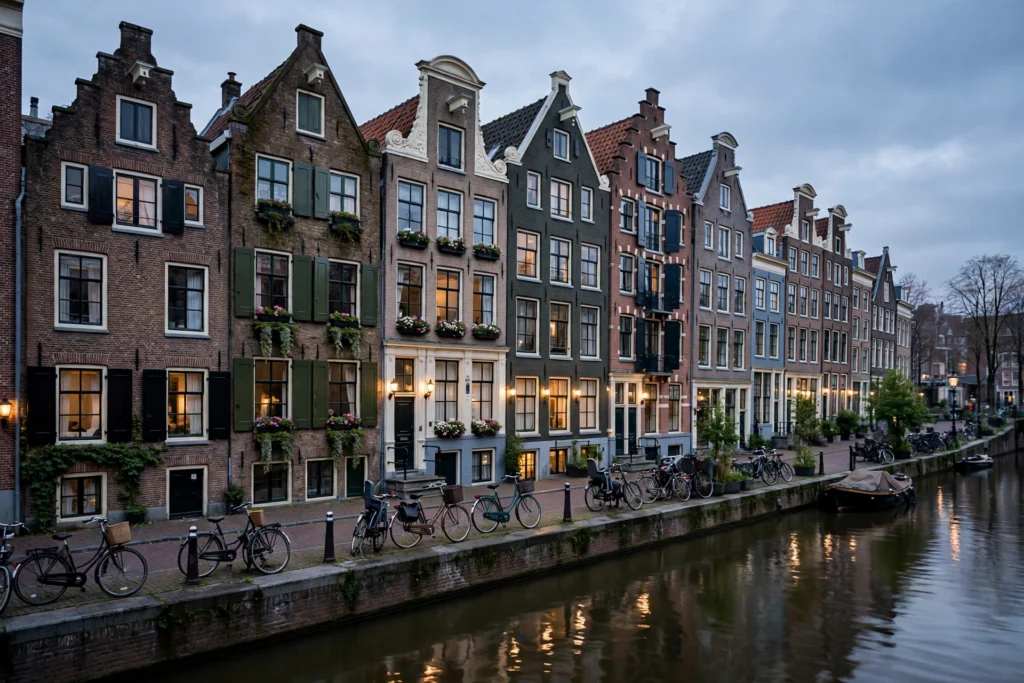
Quick Answer: Home insurance in the Netherlands has two parts: building insurance (opstalverzekering), which covers the structure, and contents insurance (inboedelverzekering), which covers your belongings. It is not legally mandatory, but mortgage lenders almost always require building insurance. A combined policy for a family home typically costs €200–€600 a year, or roughly €34–€41 a month for a family with children in 2026.
Ask a newcomer to the Netherlands what home insurance they need and you will usually get a blank look — not because the answer is complicated, but because the Dutch split it into pieces that other countries bundle together. The building and the things inside it are two separate policies, the liability policy that most Dutch households treat as essential is a third, and the apartment you rent in Amsterdam needs a completely different combination from the house you buy in Utrecht. Buy the wrong combination and you can be paying for cover your landlord already has while the things you actually own sit uninsured.
This guide explains how home insurance in the Netherlands actually works in 2026: the two main policies and the liability policy that goes with them, what each costs, what mortgage lenders require, what is not covered, and how to claim. Prices are indicative estimates based on published 2026 figures — your own premium will depend on your home, its location and your insurer. This is general information, not financial advice.
Is home insurance mandatory in the Netherlands?
No — home insurance is not legally required by the Dutch government. There is no law that forces a homeowner or a tenant to insure their home. That surprises people coming from countries where it is a legal obligation, and it is the first thing to understand about the Dutch system.
In practice, however, it is close to mandatory for owners. Almost every mortgage lender makes building insurance (opstalverzekering) a condition of the loan: the bank wants its security — your house — protected against fire, storm and water damage before it lends you hundreds of thousands of euros. If you buy with a mortgage, you will need building cover from the day the loan starts, and the lender may ask to see the policy. If you buy without a mortgage, the choice is yours, but going without building cover means carrying the full rebuilding cost of your home yourself.
Tenants are in a different position. A landlord cannot usually force you to take out contents insurance, and the building itself is the landlord’s responsibility, not yours. But your own belongings — laptop, clothes, bicycle, television — are not covered by the landlord’s policy, and a contents policy costing €8–€15 a month is what protects them. The Dutch consumer association, the Consumentenbond, recommends liability insurance for almost everyone too, at roughly €3.50–€5 a month for a single person.
What are opstalverzekering and inboedelverzekering?
The two policies cover two different things, and the dividing line is the building itself. Building insurance — opstalverzekering — covers the physical structure of your home: the walls, roof, floors, windows and permanent fixtures such as a fitted kitchen or bathroom. If the house burns down, floods or loses its roof in a storm, the building policy pays for the repair or rebuild up to the rebuilding value (herbouwwaarde).
Contents insurance — inboedelverzekering — covers everything inside the home that is not part of the structure: furniture, electronics, clothing, curtains, and the things in your garden shed. It pays for theft, fire, water damage and, on an all-risk policy, accidental damage such as knocking a television off its stand. The standard version covers named risks; the all-risk version covers accidental damage too and costs more.
The practical rule is simple: if you would take it with you when you move, it is contents; if it stays with the house, it is building. The grey area is fitted items — a fitted kitchen is building, a freestanding fridge is contents — and insurers decide these cases by their own policy wording, so check yours before you assume.
How much does home insurance cost in the Netherlands in 2026?
Dutch home insurance is affordable by European standards, but the premium depends on the rebuilding value of the house, the value of the contents, the location, and whether you choose standard or all-risk cover. The figures below are indicative 2026 ranges.
According to the Dutch Homeowners’ Association (Vereniging Eigen Huis), the average premium for building insurance is about €1.30 per €1,000 of insured value. For a home with a rebuilding value of €250,000, that works out at roughly €325 a year, or about €393 including insurance tax. Contents insurance for a typical household runs about €100–€300 a year, depending on the value of your belongings and whether you choose replacement value — which pays what it costs to buy new — or current value, which pays the depreciated amount. Liability insurance adds roughly €25–€70 a year.
Comparison sites’ November 2026 figures for a family with children taking combined building and contents cover put the cheapest five policies at €33.89 to €41.19 a month — a.s.r. at €33.89, Nationale-Nederlanden at €34.13, Unigarant at €37.77, Allianz at €40.66 and Avéro Achmea at €41.19 — with own-risk (excess) amounts of €100–€150, and a higher storm excess of €100–€375. On average, a combined home insurance policy for a townhouse in an affordable region costs between €11 and €22 a month for contents alone, and a full package for a standard family home lands in the €200–€600 a year range.
| Policy | What it covers | Indicative cost in 2026 |
|---|---|---|
| Building insurance (opstalverzekering) | Structure: walls, roof, floors, fitted kitchen and bathroom | €100–€300 a year; about €325 a year for a €250,000 rebuilding value |
| Contents insurance (inboedelverzekering) | Belongings: furniture, electronics, clothing, valuables | €80–€300 a year, or €8–€25 a month |
| Liability insurance (aansprakelijkheidsverzekering) | Damage you cause to other people or their property | €25–€70 a year; €3.50–€5 a month for a single person |
| Combined family package | Building + contents together | €200–€600 a year; about €34–€41 a month for a family with children |
Two things move the price more than anything else: location and cover level. Homes in cities or in areas with a higher burglary risk cost more to insure, and all-risk cover costs more than named-peril cover. A detached house costs more than an apartment because its rebuilding value is higher. Getting quotes from several insurers — the Dutch market is competitive, and the comparison sites list the same risks at very different prices — is worth the half hour it takes.
What does Dutch home insurance cover — and what does it not cover?
A standard building policy covers fire, storm damage, water damage from burst pipes, burglary damage to the building, and lightning. A standard contents policy covers the same risks for your belongings, plus theft. All-risk versions of both add accidental damage — the dropped television, the paint spilled on the sofa, the child who throws a ball through the window.
The exclusions matter as much as the cover. Flood damage is the biggest one: most standard Dutch policies do not cover flooding from the sea or from major rivers, because the Netherlands’ flood risk is a national-scale risk that insurers price separately. If you live in a flood-prone area, check whether your policy includes it and what the limit is. Subsidence, gradual wear and tear, and damage caused by poor maintenance are also excluded — an insurer will not pay to fix a roof that leaked for years because it was never maintained.
There are also limits inside the cover. Valuables such as jewellery, art and high-end electronics often have a sub-limit — a maximum payout per item or per category — unless you list them separately on the policy. Bicycles, which are both valuable and frequently stolen in the Netherlands, are often covered only up to a stated amount under contents insurance, and many Dutch households insure an expensive e-bike separately. Check the sub-limits before you assume your €3,000 e-bike is fully covered.
Do renters need home insurance in the Netherlands?
Renters need contents insurance, not building insurance. If you rent an apartment, the building is your landlord’s responsibility — the landlord, or the owners’ association (VvE) for an apartment block, arranges the building cover. Your job is to insure what is yours.
The combination most renters need is contents insurance plus liability insurance. Contents cover of €8–€15 a month protects your laptop, clothes, bicycle and camera against fire, water damage and theft. Liability cover of €3.50–€5 a month protects you if you cause damage to someone else — the classic case is a washing machine leak that damages the flat below yours, which can cost thousands and is not covered by your contents policy. The Consumentenbond advises a liability sum insured of at least €1.25 million, and says €2.5 million is often the better choice — the premium difference is small.
One detail renters miss: if you rent a furnished apartment, the furniture belongs to your landlord and is covered by their policy, but your own belongings are not. If you rent unfurnished and have accumulated furniture, electronics and appliances of your own, contents insurance becomes much more important, and a replacement-value policy — which pays what it costs to buy new — is worth the small extra premium over a current-value policy that pays the depreciated amount.
What about apartments and the VvE?
If you buy an apartment in the Netherlands, you become a member of the owners’ association — the Vereniging van Eigenaars, or VvE — and the VvE arranges the building insurance for the whole block. You pay for it through your monthly VvE contribution, and you do not need a separate building policy for the structure.
What you do need is contents insurance for your own belongings inside the apartment, and liability insurance as above. Check what the VvE policy covers before you buy contents cover: the VvE policy typically covers the building and the common areas, and sometimes the fitted kitchen and bathroom inside your apartment, but never your furniture and electronics. If the VvE’s building policy has a high excess, that excess may fall on you for damage inside your own apartment — another reason to read the VvE documents before you sign the purchase.
How do you buy home insurance and make a claim?
Buying is straightforward: get quotes online from several insurers, compare the cover rather than just the price, and check the excess (eigen risico) — the amount you pay yourself on each claim. A policy with a €100 excess and a policy with a €250 excess are not the same policy, even at the same premium. Home insurance in the Netherlands is provided by private insurers regulated by the Dutch Authority for the Financial Markets (AFM) and the Dutch Central Bank (DNB), and you can check an insurer’s status on the AFM’s public register at afm.nl.
To claim, report the damage to your insurer as soon as you can, take photos before you start clearing up, keep receipts for emergency repairs, and do not throw away damaged items until the insurer’s assessor has seen them. For theft, report it to the police first and get a report number — insurers require one. For water damage, stop the leak and document the damage; for storm damage, note the date and time, because insurers check weather records. Most claims are settled within a few weeks if the documentation is complete; the claims that drag on are usually the ones where the damage was cleared up before anyone photographed it.
Our property insurance guide for Europe compares the Dutch system with other countries, our home insurance guide for France covers the very different French rules — where tenant insurance is legally required — and our Germany property insurance guide explains the German Wohngebäudeversicherung. Reading two or three country guides side by side is the fastest way to see which rules are genuinely Dutch and which are common across Europe.
Common mistakes with home insurance in the Netherlands
The first mistake is insuring the building for the purchase price instead of the rebuilding value. The purchase price includes the land, which does not burn down; the rebuilding value is the cost of rebuilding the structure, and it is usually lower. Over-insuring wastes premium, under-insuring risks a proportional payout — if you insure for half the rebuilding value, the insurer may pay only half of a partial claim too.
The second is forgetting the liability policy. It costs a few euros a month and covers the damage you do to other people — the leaking washing machine, the child who breaks a neighbour’s window, the bicycle accident. It is the cheapest cover in the Dutch system and the one most often skipped by newcomers. The third is assuming flood cover is included when it is not, and the fourth is not listing valuables: a jewellery collection worth €10,000 needs to be declared, not discovered at claim time.
Key Takeaways
- Home insurance in the Netherlands is not legally mandatory, but mortgage lenders almost always require building insurance (opstalverzekering) before they lend.
- Building insurance covers the structure; contents insurance (inboedelverzekering) covers your belongings; liability insurance (aansprakelijkheidsverzekering) covers damage you cause to others — most households need all three.
- A combined family package typically costs €200–€600 a year, or about €34–€41 a month; contents alone runs €8–€25 a month and liability €3.50–€5 a month for a single person.
- Renters need contents and liability insurance only — the building is the landlord’s or the VvE’s responsibility.
- Check flood cover, sub-limits on valuables and bicycles, and the excess before you buy; insure the building for its rebuilding value, not its purchase price.
Frequently Asked Questions
Is home insurance compulsory in the Netherlands?
No, it is not legally required by the Dutch government. But almost every mortgage lender requires building insurance (opstalverzekering) as a condition of the loan, so in practice nearly all homeowners have it. Tenants are not legally required to insure, though contents and liability insurance are strongly recommended.
What is the difference between opstalverzekering and inboedelverzekering?
Opstalverzekering (building insurance) covers the structure of your home — walls, roof, floors and permanent fixtures. Inboedelverzekering (contents insurance) covers the belongings inside it — furniture, electronics, clothing and valuables. If you would take it with you when you move, it is contents; if it stays with the house, it is building.
How much does home insurance cost in the Netherlands per month?
Indicative 2026 figures: a combined building and contents policy for a family with children costs about €34–€41 a month. Contents insurance alone runs €8–€25 a month, and liability insurance €3.50–€5 a month for a single person. For a home with a €250,000 rebuilding value, building insurance averages about €325 a year before tax, according to the Dutch Homeowners’ Association.
Do I need home insurance if I rent in the Netherlands?
You do not need building insurance — that is your landlord’s or the owners’ association’s responsibility. You do need contents insurance for your own belongings and liability insurance for damage you might cause to others, such as a leak into the flat below. Together they typically cost €12–€20 a month.
Does Dutch home insurance cover flooding?
Usually not as standard. Most policies exclude flooding from the sea or major rivers, because the Netherlands’ flood risk is priced separately. If you live in a flood-prone area, check your policy wording carefully and ask your insurer what flood cover is available and what its limit is.
What is the eigen risico on Dutch home insurance?
The eigen risico is the excess — the amount you pay yourself on each claim before the insurer pays. Typical building and contents policies have an excess of €100–€150, with a higher storm excess of €100–€375. A lower excess means a higher premium, so compare policies on both numbers, not just the monthly price.
Who regulates home insurers in the Netherlands?
Home insurers in the Netherlands are private companies regulated by the Dutch Authority for the Financial Markets (AFM) and supervised by the Dutch Central Bank (DNB). You can check an insurer’s registration on the AFM’s public register, and the Dutch Homeowners’ Association (Vereniging Eigen Huis) publishes guidance on average premiums and policy terms.
Disclaimer: This guide is general information about home insurance in the Netherlands, not financial advice. Premiums, policy terms and lender requirements change; confirm the current terms with your insurer or mortgage lender before you buy. Europe Insurance Guide is an independent guides publisher and is not an insurer or broker.

About the author
Written by Mehboob Ahmed
Mehboob Ahmed is the founder and editor of Europe Insurance Guide. He researches, writes and reviews the site's guides, checking facts against official European sources and updating them when rules or prices change.
Meet the Founder → More about Europe Insurance Guide →